























How mature is process management within your organisation?
Receive immediately a personal report!
Why we think process management is so important
Process management forms the basis of a well-functioning organisation. It ensures that strategic ambitions are translated into daily practice and that work is carried out in a consistent, predictable and efficient manner. By making processes explicit and consciously steering for consistency and quality, we create a grip on performance, lay a foundation for continuous improvement and keep the organisation agile in a changing environment.

Good processes lead to good results
Research within fields such as Business Process Management, Lean and Operations Management shows that organisations with mature process management perform better in terms of quality, cost control, turnaround time and customer satisfaction. In addition, these organisations appear better able to learn, improve and actually realise strategic changes. Success is thus not a coincidence, but the result of consciously designed and well-managed processes.
The 5 stages of maturity in process management
Organisations develop step by step in their way of working with processes. We describe this development in five stages of maturity:
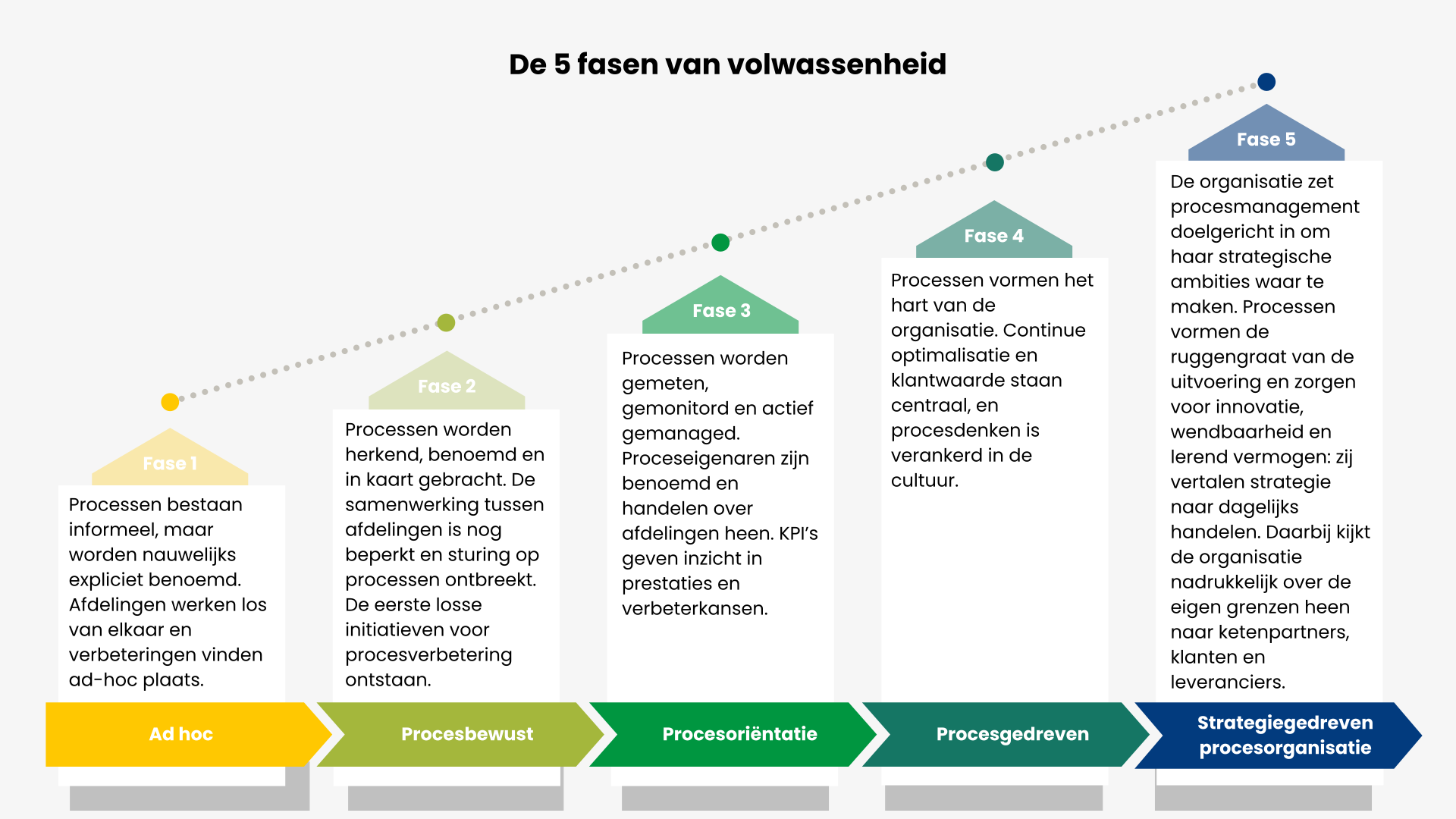
Phase 1 Ad hoc
Processes exist informally but are hardly explicitly named. Departments work separately and improvements take place ad hoc.
Phase 2 Process aware
Processes are recognised, named and mapped. Cooperation between departments is still limited and steering on processes is lacking. The first loose initiatives for process improvement emerge.
Phase 3 Process orientation
Processes are measured, monitored and actively managed. Process owners are appointed and act across departments. KPIs provide insight into performance and opportunities for improvement.
Phase 4 Process-driven
Processes are at the heart of the organisation. Continuous optimisation and customer value are central, and process thinking is embedded in the culture, from management to execution.
Phase 5 Strategy-driven process organisation
The organisation purposefully deploys process management to realise its strategic ambitions. Processes form the backbone of execution and ensure innovation, agility and learning capacity: they translate strategy into daily action. Process-based working is deeply embedded in the organisational culture, from management to execution. In doing so, the organisation explicitly looks beyond its own borders to chain partners, customers and suppliers.
Why we think strategy-driven process management is so important
Strategy determines how an organisation wants to achieve its objectives. The chosen way of working gives direction and colour to process management. Whether an organisation focuses on innovation, continuous improvement or agility, for example, determines the frameworks within which process management is set up and improved.
Process management thus supports the realisation of the strategy, but has no uniform set-up for every organisation. There is a common basis for good process management, but the real power lies in the choices that are made: where do you emphasise and what do you consciously leave out? It is precisely by applying focus and not wanting to regulate everything that process management becomes more effective. The strategy thus determines which accents are placed within process management.
Take the next step
Using the BPM maturity model, we map out where your organisation is, how your processes are structured and which development steps are needed to realise your strategic ambitions. In this way, we apply the model concretely to your processes and make the next step in process maturity together.

 Services
 Career
 About us
 Contact