




















 EN
EN  NL
NL 
A good start is critical to the success of any process improvement project. This phase is all about creating a shared picture of the problem, the goal and how to work together. Too often, the focus at the project start is mainly on content: data, processes and bottlenecks. But just as important is the human side. How do we work together? What perspectives do team members bring? And how do we ensure support from the start? After all, process improvement is more than adjusting processes or introducing new ways of working. Without mutual understanding and a joint approach, improvements remain superficial and difficult to sustain. Especially in the project start-up phase, using core quadrants can help make differences visible, express expectations and lay a solid foundation for cooperation.
What are core quadrants?
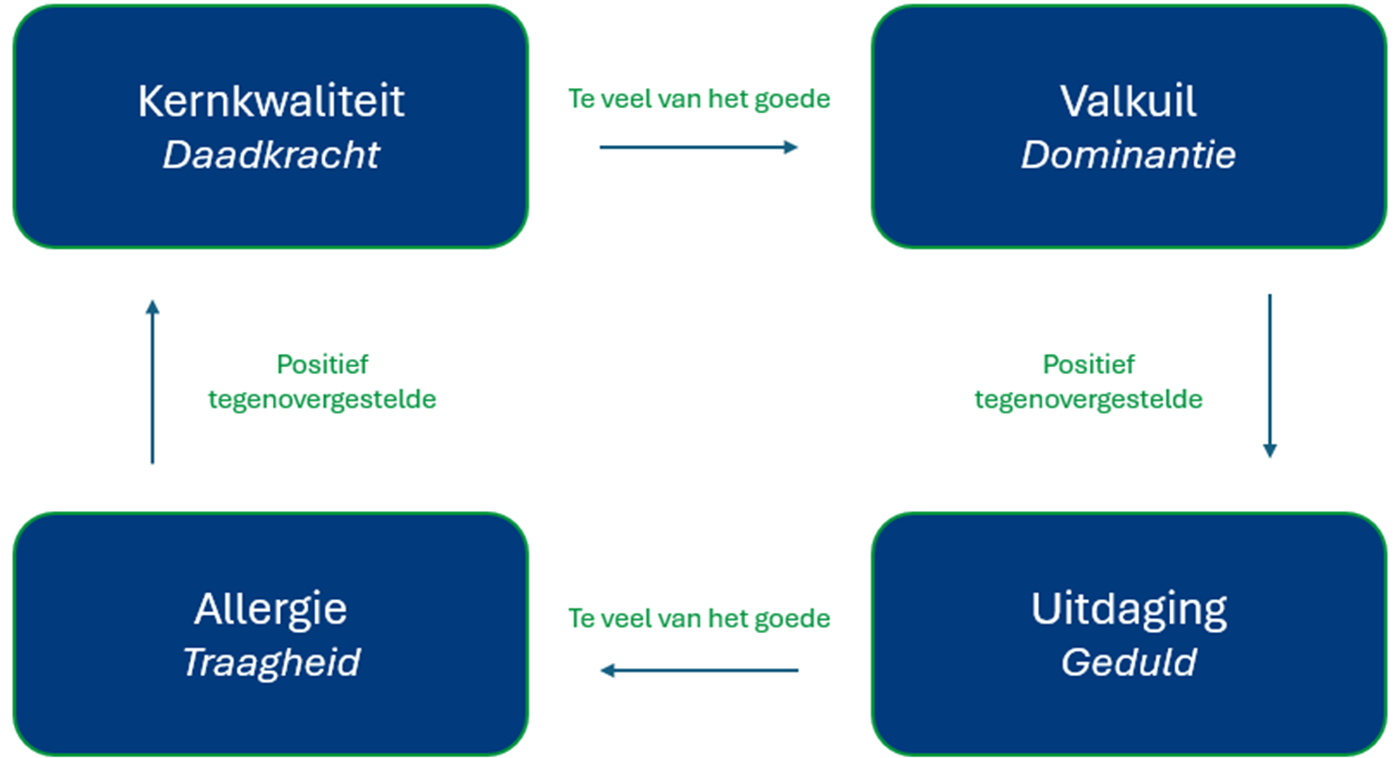
Daniel Ofman's core quadrant model helps individuals and teams understand their strengths (core qualities), pitfalls, challenges and allergies. Everyone has unique core qualities that can be very different from those of others. These differences can cause friction, especially when one person's core quality is directly opposed to another person's allergy. Ofman's model makes it clear why the friction arises and what behaviour plays a role in it.
A core quality is a positive trait that, when it overshoots, can turn into a pitfall. The challenge counterbalances and helps to avoid that pitfall. The allergy often lies with behaviour that is the opposite of one's core quality and therefore provokes irritation.
In the start-up phase, making these differences explicit helps to understand each other better. Why does one person mainly look at risks and analysis, while the other wants to move on quickly? And how do these preferences influence the way the problem is defined? Thinking about this early in the project creates a richer and more complete picture of the problem and of the cooperation needed to tackle it.
From different images to a shared starting point
Fleur is a decisive team member who cuts through knots quickly and is not afraid to make decisions. Her colleagues appreciate her energy and determination, but for Bas, a colleague who likes to analyse everything carefully first, her approach was frustrating. He sometimes found her too domineering and felt that his input was not heard. Bas liked to consider all options first, while Fleur wanted to move forward quickly. This led to tensions in the team.
During a team session on core quadrants, this pattern became apparent. Fleur discovered that her pitfall was ‘dominance’ and that her challenge lay in being more patient and giving space to others. Bas recognised that his core quality of ‘analytical thinking’ could turn into indecisiveness, and that his challenge lay in taking action more quickly.
These insights created mutual understanding. Not only did cooperation improve, problem definition also became sharper: both speed and diligence were given a place.
A strong project launch requires attention to people
Using core quadrants at the start of a process improvement project helps teams to:
- make explicit different perspectives on the problem;
- identify underlying tensions early;
- agree on cooperation and decision-making;
- build trust and support from the beginning.
Practical tips:
At the beginning of the improvement project, organise a team session in which each team member draws up his or her personal core quadrant. Have them think about their qualities, pitfalls, challenges and allergies, and then discuss these as a group. Explain how these qualities can complement or clash within the collaboration. The team can help each other further develop challenges and avoid pitfalls.
Tips
- Collaborate with opposites: Have team members collaborate with someone with an opposite core quadrant. These colleagues may find themselves in each other's ”allergy”, but through awareness, they can actually complement each other. For instance, a structured thinker and a creative brainstormer can come up with innovative and feasible solutions together.
- Use core quadrants in task allocation: Divide roles and responsibilities based on everyone's core qualities, so that team members do what they are good at and what energises them.
- Encourage feedback based on core quadrants: Providing constructive feedback from the perspective of core qualities, challenges and pitfalls promotes growth and cooperation.
Do you also want to realise sustainable change?
By using core quadrants structurally, process improvement not only becomes more effective, but also more people-oriented. The team works together with greater understanding and pleasure, leading to sustainable improvements. The example of Fleur and Bas shows how valuable this insight can be. Where at first they clashed because of their different approaches, they learned to make better use of each other's qualities. This led to smoother cooperation and a stronger team.

Want more practical insights and tips on successful process and organisational change?
 Services
 Your career
 About us
 Social impact
 Contact
 News
News