























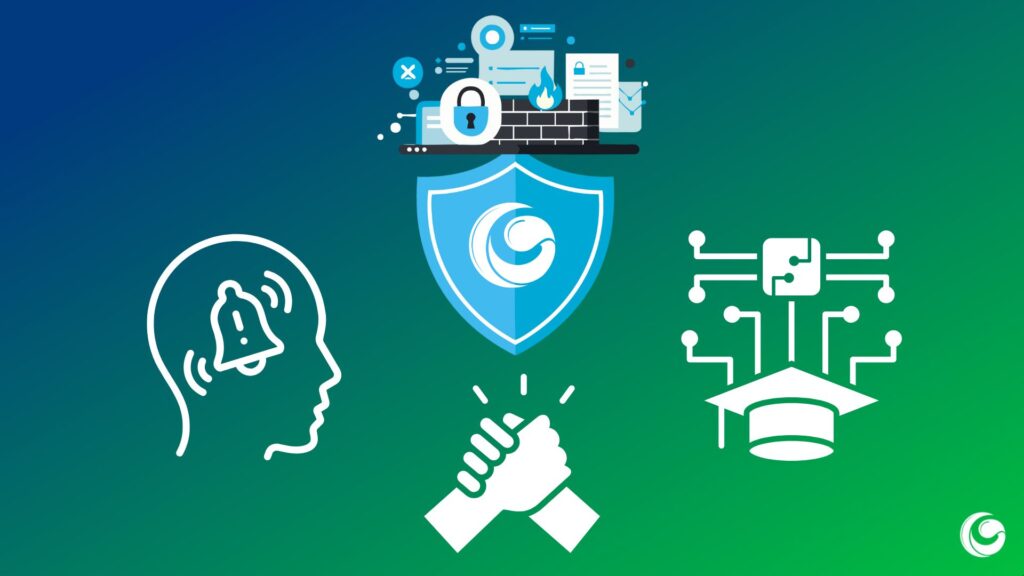
Digital Transformation and Increasing Complexity
The digital world is changing rapidly. Geopolitical tensions, cyber threats and the rise of artificial intelligence (AI) are making information security increasingly complex. Organisations that fail to protect their information properly and make their employees sufficiently aware of digital risks run considerable operational, financial and reputational risks. This puts the trust of customers and partners under pressure.
Awareness and AI literacy: Building blocks of resilience
Traditional security measures form the basis, but are no longer sufficient today. An effective information security strategy requires employees who not only understand the risks, but also know how to respond to them. Security awareness is therefore essential for digital resilience.
Due to the increasing role of AI in business processes—think chatbots and data analysis—AI literacy is becoming increasingly important. Employees need to understand how AI systems work, be able to recognise risks, critically assess output, and handle sensitive information securely. A lack of knowledge in this area can lead to data breaches, wrong decisions, or problems with legal and regulatory compliance.
Risk Assessment and Control Measures
A mature risk and compliance approach starts with understanding the risks. What information is crucial, where are the vulnerabilities within processes and systems, and what measures are necessary? By combining AI with a robust information security policy and ongoing awareness programmes, the confidentiality, integrity and availability of data are strengthened. This leads to greater cyber resilience for the organisation.
From Compliance to Culture
Frameworks such as ISO 27001 and the BIO provide guidelines for information security management. However, true security can only be achieved when there is a culture of conscious action. Security awareness and AI literacy must be part of daily work. This enables employees to actively limit risks and recognise suspicious patterns.
Strategic Advantage through Awareness and AI Literacy
Organisations that invest in awareness and AI literacy have a strategic advantage: they experience fewer incidents, comply better with regulations and increase the reliability of their processes. Especially in uncertain times, this offers certainty and confidence to customers, partners and regulators.
Ethics and Responsible Use of AI
Artificial intelligence offers many opportunities, but requires a careful and ethical approach. Transparency is crucial: users must understand how AI systems make their decisions. Respecting privacy and complying with rules such as the GDPR are necessary to protect personal data. Organisations must actively combat discrimination by checking data and algorithms for bias. It is important that important decisions are not made entirely by AI; human control remains necessary. Clear guidelines and oversight are needed to keep AI applications reliable. Sustainability also plays a role: energy consumption and environmental impact must be taken into account when developing and using AI. By following these principles, AI can be used in society in an innovative and responsible manner.
Support for Training and Policy
Would you like to know how your organisation can effectively train employees in security awareness and AI literacy? Our consultants provide support in developing information security policies, awareness programmes, and AI risk management. Together, we ensure a secure, future-proof organisation.

 Services
 Career
 About us
 Contact